Surface finishing has transformed into an engineering procedure. The quality of coating has an immediate influence on durability, corrosion resistance and the perception of the product in today’s industrial environment. As global standards tighten and consumers demand flawless finish, many factories are turning to paint robotics to attain more control and uniformity.
Modern paint robots bring precision and structured motion to the applications that previously relied on the skills of the operator. Manufacturers can eliminate inconsistencies like uneven film formation or excessive material consumption by automating spray paths, speeds and application angles. This results in a consistent coating process that supports better First Time Quality and reduced Rework.
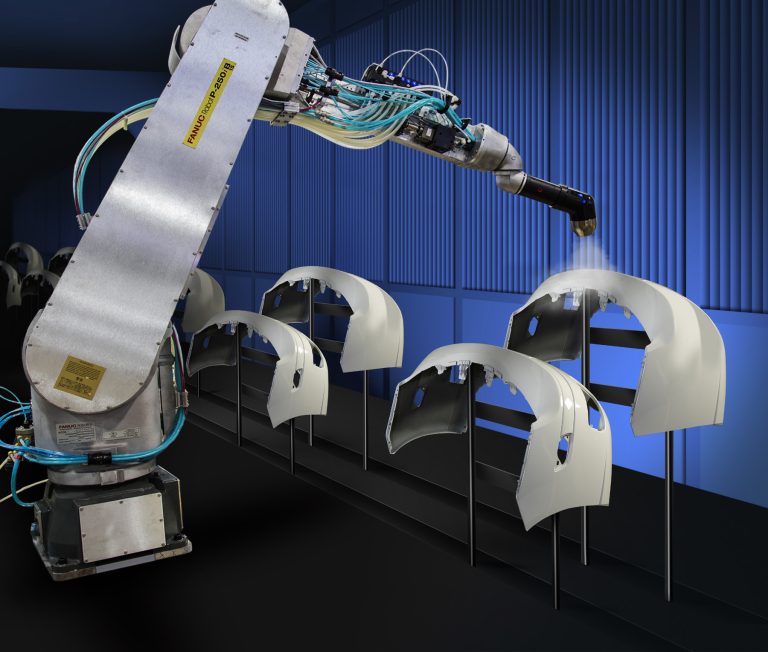
Image credit: automatedsolutions.com.au
Consistency and effectiveness are crucial to the measurement of outcomes
Because of fatigue or minor variations in technique, manual painting can lead to differences in coverage and thickness. Paint robots can eliminate this variability since they repeat the same motion pattern throughout each production process. This level of repeatability ensures uniform surface quality and optimized distribution of the material across all parts.
Advanced robotic paint systems also improve efficiency of transfer. By maintaining precise distance and orientation between applicator as well as component, overspray can be reduced and more coating material reaches the surface of the object. Reduced material waste directly impacts cost savings, while reduced emissions of volatile organic compounds support green initiatives.
Integrated fluid handling within paint robotics ensures accurate mixing ratios for multi-component coatings. This prevents inconsistent coatings that affect the integrity of finish. A flexible flow control, coupled with adjustable parameter settings allows manufacturers to modify the pattern of atomisation and spray without disrupting production.
Productivity and safer working environments
The longer time between maintenance is a significant benefit of a paint robot system. In contrast to manual processes, robotic paint cells work continuously and have very little interruption. Once programmed, they ensure consistent throughput without the need to take breaks or be under constant monitoring.
In the case of solvent-based or two-component coatings safety considerations are vital. When working with flammable or reactive non-flammable materials, atomised painting can result in dangerous conditions. Modern paint robots can operate safely in challenging environments. This decreases the chance of exposure to hazardous chemicals and increases workplace safety.
Conveyor track technology enhances productivity even further by enabling robot paint application as components continue to move. This technology increases the working space and makes sure that production lines operate efficiently.
Australian Automation Expertise Supporting Industry
It is essential that manufacturers are able to access automation partners that have experience. In Australia, Automated Solutions has gained a reputation of the provision of high-end robotic integration services. As FANUC certified robotic integrators who have extensive experience in automation engineering, the team supports businesses to implement custom robotic paint solutions aligned with their business goals.
Automated Solutions combines technical expertise as well as practical experience from the industry to aid manufacturers in evaluating the current process and developing robotic paint cells that can be optimised. Through collaboration in planning, simulation, and integration of systems, companies gain an understanding of the expected improvement in performance prior to installation.
Paint robotics adoption is not just about automation, it will result in tangible improvements to quality, efficiency, and safety. Well-engineered paint robotic systems transform surface finishing into a cost-effective, time-consuming and insecure process into an automated, reliable process. With the support of experienced technicians in automation, manufacturers can strengthen their competitiveness and set themselves up for the long term in an increasingly demanding market.